

I watched The Breaking Point of Love Dailymotion at 2 AM on a Tuesday. Bad idea. I ended up finishing the whole thing and walking into work looking like I’d been crying. Which I had. This isn’t a subtle show. It hits you over the head with a very specific fear: what if you waste your best years on someone who barely notices you exist?
- Part 1: The Story About The Breaking Point of Love in Breaking the Ice Dailymotion Movie
- Part 2: Kelly Jones and Eric Brown – The Main Characters of The Breaking Point of Love in Breaking the Ice Movie Dailymotion Cast
- Part 3: Why The Show The Breaking Point of Love Dailymotion Hit Different?
- Part 4: Conclusions
Part 1: The Story About The Breaking Point of Love in Breaking the Ice Dailymotion Movie
Seven years. That’s the number that kept echoing in my head while I watched this. Seven years of marriage, and Eric Brown still treats Kelly Jones like a stranger he happens to share a bathroom with. The show doesn’t ease you into this.
From minute one, you see Kelly smiling through pain that has become so normal she doesn’t even register it anymore.
The plot is almost too simple, which is probably why it works. Kelly flies abroad to surprise Eric for her birthday. She thinks maybe, finally, this gesture will crack through his ice. Instead she finds him with their daughter Sophia and her stepsister Bella.
And then comes the moment that made me pause the video and just stare at the wall: Sophia asks Bella to replace Kelly as her mother. Right in front of her. While Kelly stands there holding a birthday cake or whatever hopeful token she brought.
Here’s what the show gets right about emotional abuse. It isn’t dramatic. It’s boring. Eric isn’t beating Kelly or screaming at her. He’s just… absent. The show lets you sit with that boredom, that constant low-level anxiety of waiting for someone to text back, to look up from their phone, to remember you exist.

Kelly’s smile isn’t resilience. It’s a habit she’s developed to survive.
Kelly’s breaking point is actually a moment of clarity. She breaks through the illusion, not into chaos but into truth. That reframe is subtle and smart.
I kept thinking about an aunt while watching this. She stayed married for twelve years to a man who forgot their anniversary multiple times. She used to joke about it. Then one day she stopped joking and left. Kelly’s breaking point feels like that.
Not a big explosion. Just a woman finally accepting that the person she hoped her husband would become is never going to show up.
Part 2: Kelly Jones and Eric Brown – The Main Characters of The Breaking Point of Love in Breaking the Ice Movie Dailymotion Cast
Kelly Jones Broke My Heart

Not because she’s perfect, but because she tries so hard to be. In the early episodes, she’s constantly adjusting herself. Her tone of voice, her facial expressions, her expectations. All dialed down to avoid disturbing Eric’s peace. Watching her is exhausting because you recognize the performance.
You’ve probably done it too. Smiled when you wanted to scream. Said “it’s fine” when it absolutely wasn’t.
Imagine, someone just simply leaves a room. That’s it. No speech, no courtroom closing argument. But the meaning sits underneath the action. Kelly stops waiting for permission from everyone else. Family, spouse, social expectations. She gives it to herself.
I feel that the ordinariness of the act makes it powerful. Real boundaries rarely arrive with orchestras. They arrive with a small decision repeated once, then again.
What makes Kelly interesting is that she isn’t a pushover in other areas of her life. The show hints that she’s competent at work, liked by colleagues, functional in ways that make her marriage dysfunction stand out sharper. She can handle everything except the one person who should have her back.
That specificity feels real. We don’t fall apart universally. We have that one area where we keep accepting crumbs.
Eric Brown is a Coward

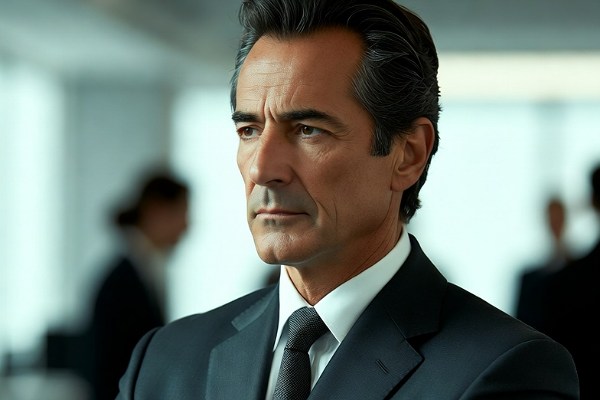
I don’t think the show even tries to make him sympathetic, which I appreciate. He isn’t secretly hurting or traumatized. He’s just checked out. The performance by whoever plays him (the casting is spot-on) captures that particular male blankness.
The way he looks at Kelly like she’s furniture. The way he remembers Bella’s preferences but forgets his wife’s birthday. It isn’t that he can’t love. He just can’t love Kelly, and he won’t admit it because that would require action.
Sophia is the tragedy here. The show doesn’t make her evil. She’s a kid who learned that her father’s attention goes to Bella, so she follows the power. When she asks Bella to be her mother, she isn’t trying to hurt Kelly. She’s trying to secure her own position in a family where affection is clearly conditional. That nuance wrecked me. Kids adapt to survive. Sometimes that adaptation looks like cruelty.
Bella Jones. God, what a mess. The stepsister who steps in. The show hints that she knows exactly what she’s doing, but there’s also something sad about her. She takes Eric and Sophia because she can, because it proves something about her desirability. I don’t think she even wants Eric particularly. She wants to win. That makes her more pathetic than villainous, though Kelly certainly doesn’t see it that way.
Part 3: Why The Show The Breaking Point of Love Dailymotion Hit Different?

I’ve watched a lot of these short dramas. Usually they’re about revenge or dramatic comebacks. The Breaking Point of Love is quieter. Kelly doesn’t burn Eric’s house down or show up with a hotter boyfriend. She just… stops. Stops trying, stops hoping, stops showing up. That ending felt more revolutionary than any revenge plot could have.
The show’s popularity on Dailymotion makes sense to me. People are watching this on their phones during commutes, in bed, in quiet moments when they’re questioning their own relationships. The comments sections are full of women saying “this is my life” and “I needed to see this.” That isn’t accidental.
What struck me is how accurately the show names something people usually talk around. The slow death of hope inside a one sided marriage. Not a big betrayal. Not a dramatic affair. Just the long grind of realizing you keep showing up with effort that never gets returned. I’ve watched that happen to someone close to me. It didn’t look like shouting or smashed plates. It looked like quieter things.
Fewer jokes at dinner. Longer pauses before answering simple questions. Eventually you could feel the hope thinning out.
The show also understands something subtle about how many women navigate conflict. People often expect revolution. Blow up the marriage, burn the bridge, declare independence. But in real life, a lot of change starts smaller. A door closing. A conversation you refuse to restart.
A line you decide not to cross back over. I’ve seen that kind of boundary hold stronger than any dramatic confrontation.
I think the title is doing more work than it appears. “Breaking point” suggests drama, explosion, a moment of crisis. We know it doesn’t apply here.
Part 4: Conclusions

So what happens after you reach your breaking point? The show doesn’t give easy answers. Kelly leaves, but we don’t see her thriving immediately. There’s no montage of her new perfect life. Just a woman walking away from a seven-year mistake, carrying the weight of that time but finally putting it down.
I keep thinking about that birthday scene. How Kelly probably spent hours choosing her outfit, rehearsing what she’d say, building up this fantasy of reconciliation. And then reality just… happens. No dramatic music. Just her daughter asking another woman to be her mom. That’s the show’s power. It finds horror in the mundane.
If you land on The Breaking Point of Love, o Breaking the Ice full movie while scrolling ReelShort, brace for something quieter than twists. The show isn’t chasing shock. It’s chasing recognition, and that can hit harder.
What it captures, at least in my view, is a kind of loneliness people rarely name out loud. Not abandonment exactly. More like the exhaustion of performing stability while everything inside you keeps collapsing. I’ve seen that look before.
A friend of mine once hosted a dinner party two days after a breakup that wrecked her. She smiled through the whole evening, poured wine, asked everyone about their week. Nobody noticed the tremor in her hands. That’s the emotional territory this show explores.
Kelly becomes the center of that tension. She doesn’t explode. She doesn’t give a cathartic monologue about reclaiming herself. Instead, the series lets the silence do the work. You watch her absorb disappointment after disappointment until something small finally shifts. The change almost feels invisible at first.
Then the door closes.