

I used to think love meant cheering from the stands; then I watched Lily coach her boyfriend to Grand Slam glory while her own dreams collected dust in the trophy cabinet. Queen Of Hearts served a bruise I still press just to feel the ache.
Now, every time I catch a replay, I feel the phantom bruise she left behind. I mean, it still aches but I press it anyway, just to remember what it costs to love like that.
Also Watch As: Queen of the Court
- Part 1: Everything You Should Know About the Plot of Queen Of Hearts
- Part 2: Meet the Coolest Characters and Cast of Queen Of Hearts
- Part 3: Overall Thoughts About the Central Theme of Queen Of Hearts
- Part 4: Conclusive Thoughts and Crazy Speculations About Queen Of Hearts
Part 1: Everything You Should Know About the Plot of Queen Of Hearts

The first scene thuds like prophecy: a single tennis ball striking clay in slow motion, synced to a heartbeat that might be Lily Pearson’s… or ours. Once a teenage prodigy with a serve that bent physics, she now lives in the shadow of her boyfriend and pupil, Adam.
Her life is color-coded servitude: yellow for practice, blue for press, red for cheat days. She strings his rackets, calculates his macros, absorbs his moods like weather. When Adam hoists the U.S. Open trophy and kisses the camera instead of her, Lily’s smile fractures so quietly it could be mistaken for lighting.
Then comes Mia Sparks: seventeen, pig-tailed, and audacious enough to call Adam “coach-boo.” Adam, ever the narcissist in Nike, tells Lily to mentor the girl. “Your brain still works miracles, babe,” he says, turning love into labor once again. The line lands like a line judge’s call: OUT.
Lily books a one-way ticket to Rome, to the academy where her dreams once lived. The courts are empty, littered with dead leaves that crunch like applause long forgotten. She picks up a racket, serves until her shoulder bleeds: pain doubling as baptism.
Cue the montage of resurrection: a physiotherapist with kind eyes; a sports psychologist who tells her that guilt and gravity share a root word; a drunk-dial to Adam that ends in voicemail silence. Every frame tightens around a woman unlearning permission.
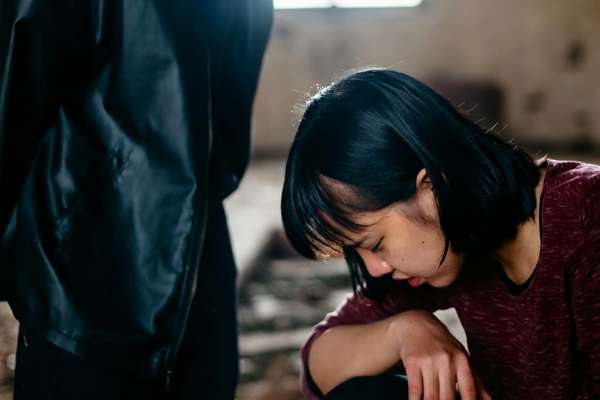
She qualifies for a tournament as a wild card. A phrase that feels like destiny’s inside joke. Fate, of course, arranges a semifinal against Adam. The rain delay feels biblical. In the locker room, their final rally isn’t with rackets but words.
“I made you relevant,” he spits.
“You made me a ghost,” she answers.
When play resumes, she fakes an injury timeout, rewraps her wrist, and walks back onto court with feral calm. The crowd senses shift before the score does. Straight sets later, Adam’s empire collapses under applause meant only for her. She doesn’t look at him once.
At the trophy ceremony, flashbulbs demand smiles. Lily looks past every lens, straight into her own reflection on the silver plate: finally in focus.
The end? Adam signs autographs alone; Mia hands out sodas at a junior camp; Lily opens an academy for girls told “too late.” The final frame is a question disguised as hope. A little girl asking, “Can hearts be unbroken?” Lily doesn’t answer. She tosses her a racket. The ball is back in play.
Together, the cast chemistry mirrors tournament tension: grunts, sweat, and triumphs feel tangible, like victories rented for a moment but paid for in full effort. Watching them, I didn’t just witness a show; I felt the cadence of ambition, the heartbeat of competition, and the quiet, stubborn poetry of reclaiming one’s power.
Part 2: Meet the Coolest Characters and Cast of Queen Of Hearts
Lily

In Queen of Hearts, she’s embodied by an actress who, I heard, actually played college tennis. Possibly mere rumors but it shows. Every forehand feels lived-in, muscle memory wrapped in melancholy.
There’s a quiet authority in the way she grips the racket, as if she’s holding both her past and her potential at once. Her frustration never tips into melodrama; it simmers instead, precise and poised.
Watch her pinky. Yes, the pinky. Watch it twitch when Adam interrupts her mid-swing. It’s a gesture so subtle it could’ve been accidental, but on-screen it lands like a thesis: control meeting its breaking point. She turns irritation into choreography, defiance into something almost balletic.
Just a woman rediscovering the physical grammar of rage and grace.
What makes her performance linger isn’t power, but restraint. She doesn’t demand empathy; she earns it, one serve, one swallow, one almost-smile at a time.
Adam
Lily’s co-star, on the other hand, exudes entitlement and overbearing confidence in his calf-flexing; his smirk is the kind that could generate lawsuits for emotional sabotage if acting were prosecutable.
Mia Sparks, a newcomer, carries herself like someone perpetually auditioning for attention, perfect for a character who masks cunning with a veneer of youth. Coach Ramirez, Lily’s first mentor, exudes cigar-scented wisdom; the actor improvised the line, “Love is doubles, not singles. Remember that,” and I swear I inked it on my wrist for a week like it was gospel.
Jax, the sports commentator, delivers meta-narration at espresso speed; his voice serves as a Greek chorus, simultaneously hilarious and brutal, judging every baseline misstep with caffeinated precision.
Little Zara, the academy kid who mirrors Lily’s past, smiles with missing front teeth, her serve weak but her gaze ferocious: an unspoken reminder that potential often arrives disguised as imperfection.
Part 3: Overall Thoughts About the Central Theme of Queen Of Hearts

Queen of Hearts argues that sacrifice is a boomerang: throw it too far, and it comes back sharpened, slicing into the parts of yourself you forgot existed. Lily’s arc isn’t about revenge; it’s about reclaiming authorship of her own story, rewriting the margins where ambition and self-worth were once footnotes.
The show interrogates why female achievement is expected to coach male triumph rather than compete for the trophy itself.
Every rally, every swing, every measured breath is a negotiation: how much of myself am I willing to retrieve today? Mid-episode, I found myself putting stuff down. Something I haven’t done since that one torturous college poetry class where iambs felt like handcuffs.
The tennis metaphors are relentless but earned: deuce equals doubt, advantage equals awakening, match point equals mirror. The camera collaborates with the narrative: low-angle shots inflate Adam’s ego until Lily literally towers above him on the trophy dais, a visual coup.
I rewound the scene where she tapes her own wrist because it visualizes self-parenting most powerfully.
The betrayal is staged in a locker room where mirrors multiply her face across the room, each reflection a Lily she once abandoned to obligation or fear. When she finally strides out, the mirrors remain empty: no reflection, no more selves to sacrifice.
That silence, that deliberate stillness, I drowned in it. It was louder than any slam of a racquet against a ball. It’s the quiet exhale after all the matches you were told you couldn’t win.
Part 4: Conclusive Thoughts and Crazy Speculations About Queen Of Hearts

I have an active imagination. Who knows if Lily’s Academy becomes a pipeline for prodigies, and within three seasons she’s coaching a girl who will steamroll Mia Sparks in the Australian Open final? Karma served at sunrise with a side of victory toast.
Adam attempts a comeback but develops the yips; sponsors bail faster than a faulty line judge, leaving him teaching tennis at a Vegas resort, hustling tips from honeymooners who think his flailing serves are part of the show.
Meanwhile, Mia pens a tell-all memoir ghost-titled Sparks Fly, but it flops spectacularly because public sympathy has migrated to flawed heroines, messy and human, leaving entitled teens to rot in their own narrative bubbles.
Jax, the commentator, launches a podcast: Game, Set, Soul, with Lily as his first guest. Their banter is instant gold, so sharp and playful that ESPN offers her a color-commentary gig, analyzing men’s matches with zero bias and maximum shade.
Reddit fandom erupts: fan-fiction thrives, shipping Lily with her physiotherapist, threads topping 3,400 upvotes and climbing.
My wildest theory: the final girl person in the epilogue becomes the protagonist of a spin-off, Ace of Hearts, where the stakes are new: date the rival or defeat her. And the cycle of messy triumph continues.
I walked away from the finale with a vow: stop coaching other people’s happiness while letting my own dreams gather dust. The next morning, I ordered a tennis racket, feeling utterly ridiculous. The first ball I swung launched straight into the neighbor’s pool… splash, metaphor, baptism.
Queen of Hearts didn’t just narrate a break-up; it served me my own unforced error and reminded me that returning the serve is sometimes the most radical, joyful rebellion.