
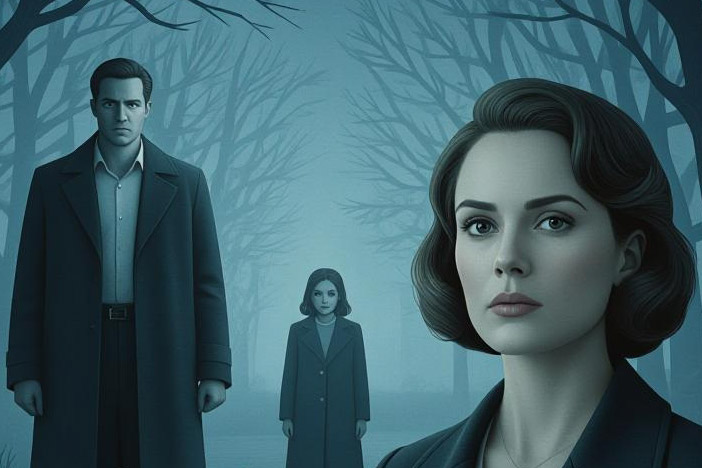
I watched We’re Your Parents on ReelShort at 2 a.m. while nuking Thanksgiving leftovers. By the time the credits rolled, I’d lost my appetite and gained two new boogeymen: Mom’s apron and Dad’s gravy spoon. The short only runs eleven minutes, yet those two performances stretched into my dreams like taffy.
Below, I obsess over the pair who turned pumpkin spice season into psychological warfare—no masks, no fangs, just parental vibes dialed to “sinister.”
- Part 1: Everything You Should Know About the Plot of We’re Your Parents – Through Mom and Dad’s Eyes
- Part 2: Meet Annie Sullivan and Michael Perl – Mom and Dad, the Sweetest Nightmare Couple on Streaming
- Part 3: Overall Thoughts About Mom and Dad in We’re Your Parents – Why Annie Sullivan and Michael Perl Win Horror Without Even Trying
- Part 4: The Next Best Show After We’re Your Parents – Try Pregnant by My Ex’s Professor Dad for a Different Kind of Family Knot
Part 1: Everything You Should Know About the Plot of We’re Your Parents – Through Mom and Dad’s Eyes
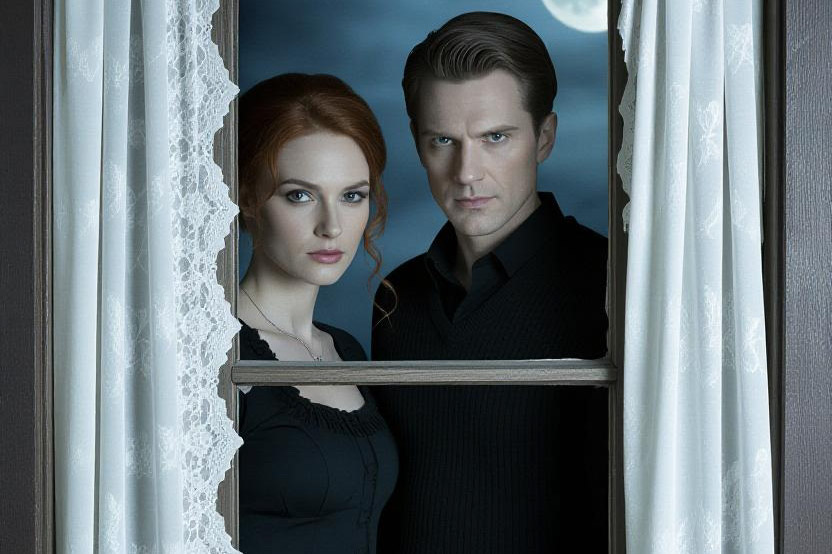
The story opens on Erin’s Lyft pulling away, leaving her alone on the porch. Mom flings the door wide before the bell rings, almost like she was posted there, ear to wood. Dad stays glued to the stove, back to the audience, gravy bubbling like hot lava. From this moment, the short becomes a two-person puppet show and Erin is the new marionette.
Mom chatters about neighbors who “moved to Florida,” but her tone lands somewhere between gossip and eulogy. She keeps touching Erin’s hair, measuring length like a seamstress. I remember my own mother doing that after my first semester; here, it feels like she’s checking if the merchandise arrived intact.
Dad finally turns, holding the gravy boat like the Holy Grail. His face is blank, but the spoon never stops swirling: clockwise, always clockwise. Erin asks if he’s using the old recipe; he answers, “Gravy’s the glue,” then falls silent.
That line etched itself into my skull because my dad jokes about gluey mashed potatoes every year. Hearing the same words stripped of humor felt like catching your reflection blinking out of sync.
The turkey arrives center stage, glistening under chandelier light like some overfed idol. The couple treat it less as food and more as ritual: carved sacrifice, centerpiece of devotion and control.
Mom’s eyes gleam when Erin reaches for a second helping, pride and surveillance tangled in the same expression. Dad watches her chew as if keeping score, his gaze ticking with each movement of her jaw, a metronome of expectation disguised as affection.
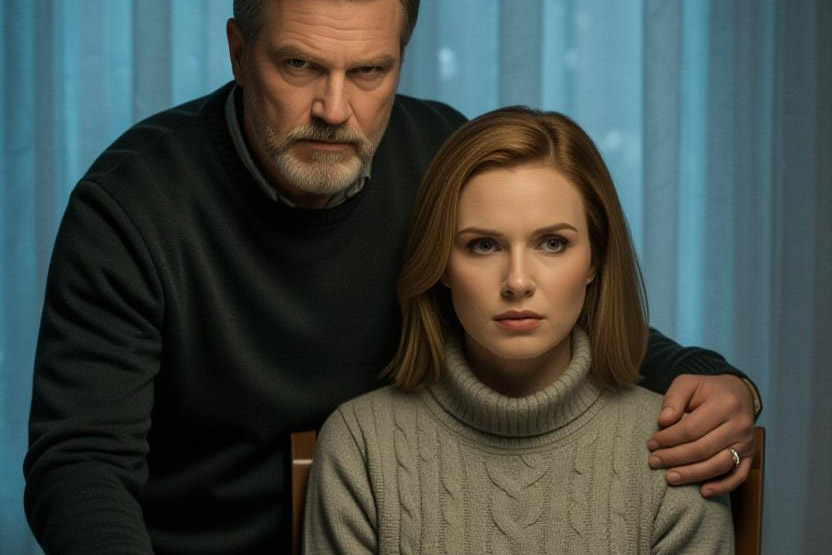
I caught myself unconsciously syncing with her rhythm: bite, pause, swallow… as if breaking tempo might expose me too. The air in the room thickened with politeness and gravy, that suffocating flavor of family performance.
When Erin finally swallowed, I did too, relieved, complicit, and somehow just as hungry..
Locked basement door? Mom claims “old pipes.” Scratched family photos? Dad mutters “reflections ruin film.” Every excuse is delivered with the calm of reading a grocery list. The horror isn’t what they say, it’s how reasonable they sound while saying it.
By the time Mom whispers, “It’s time,” the living room feels pressurized, air too thick for lungs. Erin backs toward the window, and we see what she sees: the pair standing shoulder-to-shoulder, carving knife raised like a communion wafer. Cut to black.
No chase, no blood, just the implication that parents you’ve known since birth can pivot from protectors to predators between bites of yams. I tossed my leftovers in the trash; even Tupperware felt complicit.
Watching the cast, I understood what “family is a private language” truly means, and how terrifying to be the one suddenly fluent in a dialect you never agreed to learn.
Part 2: Meet Annie Sullivan and Michael Perl – Mom and Dad, the Sweetest Nightmare Couple on Streaming

Annie Sullivan’s Mom could host a cooking channel, until she smiles three degrees too wide. Annie has the maternal glow baked in: apple cheeks, soft arms, voice like chamomile. That’s precisely why the shift chills. She never morphs into a witch; she simply lets the kindness calcify.
Watch her butter a roll: the knife scrapes, her gaze flicks to Erin, played by Maria, and the corner of her lip twitches, not up or down, but sideways, like a glitch. I replayed that twitch five times, convinced my Wi-Fi lagged. Nope, it’s just Annie serving micro-terror on a warm plate.
Michael Perl’s Dad is the human equivalent of a stove left on low: quiet, steady, capable of burning the house down while you nap. Michael’s built like the dads who fix your bike chain without asking: flannel, slouched shoulders, gravy stain on khakis. He speaks maybe four sentences, yet his silence shouts.
My favorite beat: Erin jokes about football, Dad’s shoulders stiffen one millimeter. Enough to signal the entire room drop the topic. I tried that move at my family dinner; my cousin just kept talking. Turns out real life lacks Michael’s volume knob.
Together, Annie and Michael feel married in that scary, wordless way: finishing chores without eye contact, passing salt sans clink. Their teamwork is so seamless it borders on choreography. When they flank Maria at the couch, each standing at 45-degree angles, it’s predator pincer tactics disguised as affection.
I half expected them to meow like cats marking territory.
The casting note that keeps me up: Annie and Michael are close in real life: old theater buddies. That comfort bleeds onscreen; they touch each other’s elbows, share inside smiles, operate on a frequency most can’t hear.
Part 3: Overall Thoughts About Mom and Dad in We’re Your Parents – Why Annie Sullivan and Michael Perl Win Horror Without Even Trying

Hollywood monsters need latex and fangs; these two need only repetition and casserole. Their genius lies in familiarity. I’ve tasted that gravy, sat on that plaid couch, heard my own father brag about “secret ingredients.” The short weaponizes nostalgia, and Annie plus Michael are the ammunition.
They also respect the rule of low-budget storytelling: the audience fills the dark. By never confirming whether Erin is paranoid or prey, the actors force me to supply personal baggage. I inserted my childhood memory of being told “we’re just looking out for you” when I wanted to quit piano.
Suddenly Mom’s apron carried my unfinished scales; Dad’s knife resembled my instructor’s metronome. The horror became bespoke.
Another sneaky choice: the couple never raise their voices. Volume stays at Sunday-dinner murmur, so when Erin’s breathing accelerates, it’s the loudest thing in the mix. Annie and Michael act like they’re protecting the baby monitor from waking an imaginary infant.
Lastly, they nail the parent paradox: wanting your company while inspecting you for defects. Annie’s compliments (“Your hair grew so…healthy”) land like quality-control checks. Michael’s silence feels like disappointment I’ve actually lived. Together they embody every family gathering where love and judgment share the same plate.
I left the short wondering if my own folks have a basement I’ve never noticed. That’s power: two actors, one set, zero dollars of CGI, and I’m texting my mom “everything ok?” at 3 a.m. like a guilty teenager.
Part 4: The Next Best Show After We’re Your Parents – Try Pregnant by My Ex’s Professor Dad for a Different Kind of Family Knot

When Mom and Dad finally ushered Erin offscreen, I needed something trashy to hose the dread away. Instead, I stumbled into Pregnant by My Ex’s Professor Dad, and honey, the parental terror shape-shifted rather than vanished.
Here the dad in question is Dorian: salt-and-pepper literature prof, elbow patches, bookshelf that smells like cardamom and secrets. He sleeps with student Emily, one impulsive night, then strolls into Monday’s lecture like syllabi are armor. The surprise? Emily’s recent ex, Brandon, is Dorian’s son.
Cue Thanksgiving dinner where Grandpa-to-be, baby-daddy, and scorned son pass the potatoes.
What hooked me is Dorian’s eerily calm tone when explaining classical tragedy to his own disaster. He quotes Oedipus while his ex-girlfriend carries his unborn child: professor by day, cautionary tale by night. Like We’re Your Parents vertical drama, the horror is conversational.
No one brandishes a knife; they wield résumés and dinner forks. The camera lingers on Dorian’s hand pouring red wine: exact shade of cranberry saucel, and I flashed back to Dad’s gravy boat. Different table, same dread.
Emily’s dilemma also reframes the parental dynamic. Instead of fearing Mom and Dad, she fears becoming them: trapped in a generational loop she can’t syllabus her way out of. I binged all available episodes, equal parts scandalized and sympathetic, and realized horror wears many aprons: some stained with blood, others with Merlot.
So if Annie and Michael left you paranoid about your own parents, hop over to Dorian’s lecture hall. You’ll exit relieved your family drama doesn’t require footnotes: or maybe convinced you prefer isolation. Either way, keep the leftovers sealed; you never know which dish hides the test results.