
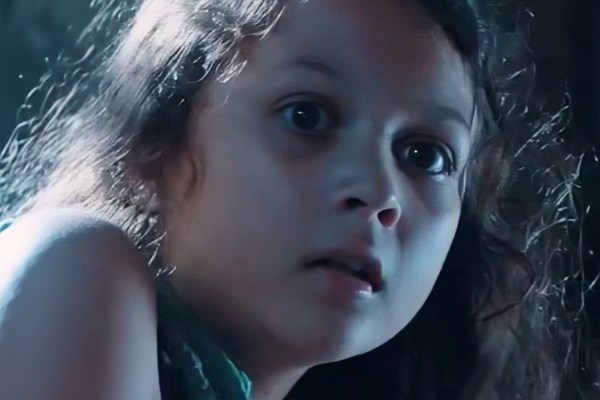
I’ve watched that pilot episode four times now. Each time, I catch something new in Aria’s eyes; that flicker of survival instinct overriding childhood innocence. The actress captures something primal here, something that makes you remember every time you’ve ever had to grow up too fast.
And when the title card flashes, The Daughter of Zeus, you realize this isn’t just another mythological reimagining. This is something else entirely.
- Part 1: The Famous Daughters vs. Our Forgotten Heroine
- Part 2: The Golden Lamb and the Champion’s Burden
- Part 3: Cameron Porras and the Art of the Reluctant Villain
- Part 4: The Daughter of Zeus Streaming Guide Online
Part 1: The Famous Daughters vs. Our Forgotten Heroine
Who Is the Daughter of Zeus, Really?
If you Google “Who is the Daughter of Zeus,” you’ll get the expected hits. Athena, springing fully formed from Zeus’s skull in a helmet and armor, the Goddess of War who needs no introduction. She was the goddess of war, the female counterpart of Ares, one of three virgin goddesses who defined wisdom and strategic combat.
But here’s what those search results miss, what The Daughter of Zeus understands at its core: lineage isn’t destiny. Athena had power from birth. Artemis had purpose from conception. Wonder Woman had truth and compassion woven into her very existence. They never had to wonder who they were because the world never let them forget.
Aria, the protagonist of The Daughter of Zeus, exists in the margins of that mythology. She’s the “forgotten” daughter, the one history wouldn’t record because her story didn’t end with triumphant ascension or tragic martyrdom. It ended? No, it began… with survival.

With a girl who watched her mother die and decided that the divine were monsters wearing beautiful faces. When we ask “Who is the Daughter of Zeus” in the context of this drama, we’re not asking about bloodlines or divine portfolios.
The contrast is brutal and brilliant. While Athena strategized wars and Artemis hunted sacred beasts, Aria was learning which mushrooms wouldn’t kill you and how to track deer through snow.
While Wonder Woman left paradise to save man’s world, Aria was trying to keep one small family alive in a world that had already taken everything from her. The Daughter of Zeus doesn’t diminish those legendary daughters, it contextualizes them.
It asks us to consider what divinity looks like when it’s not handed down with power and purpose, but discovered in blood and desperation.
And that discovery? It hits different when you’ve spent your whole life believing gods are heartless.
Part 2: The Golden Lamb and the Champion’s Burden
When Survival Becomes Sacrilege
Let me set the scene for you, because this is where The Daughter of Zeus transforms from “interesting pilot” to “I cannot look away.” Aria, now grown but still carrying that child hiding in the shadows, is hunting in the forest.
Her sister is starving. Time is running out. And there, impossibly golden and impossibly still, is a lamb that seems to glow with its own inner light.
Here’s what I love about this moment: Aria doesn’t hesitate. There’s no dramatic monologue about the sanctity of divine creatures. No moment where she recognizes the lamb for what it is and makes a calculated choice.
So she kills it. The Daughter of Zeus doesn’t flinch from this reality. It doesn’t sanitize Aria’s desperation to make her more palatable. It lets her be hungry and scared and ruthless, because that’s what survival looks like when the world has shown you no mercy.
Of course, the lamb isn’t just a lamb. It’s a sacred creature of Olympus, and its death sends ripples through the divine realm that bring Kairos thundering back into Aria’s life. And here’s where the actor Cameron Porras becomes essential to understanding The Daughter of Zeus and its emotional architecture.

Porras plays Kairos with this incredible restraint; he’s the Immortal Champion, the mother’s killer, the boogeyman from Aria’s childhood nightmares, but there’s something fractured in his eyes from the first moment. Something that suggests his violence has always been a cage, not a choice.
Their confrontation is electric. Aria, breathless with recognition and terror, facing the man who spared her once and might not spare her again. Kairos, duty-bound to deliver punishment for the lamb’s death, but clearly rocked by something he can’t name.
The forced journey to Olympus that follows shouldn’t work as well as it does. The “enemies forced to travel together” trope is ancient. But The Daughter of Zeus injects it with genuine psychological stakes. Aria isn’t just angry at Kairos; she’s traumatized by him. Every time she looks at his face, she sees her mother’s death.
Every time he speaks, she hears the silence that followed the violence in her childhood home. And Kairos… Kairos is fighting his own war. He’s trying to maintain his divine detachment while clearly being affected by Aria’s ferocity, her refusal to break even when she has every reason to crumble.
Part 3: Cameron Porras and the Art of the Reluctant Villain
Why Kairos Might Be Television’s Most Complicated “Killer”
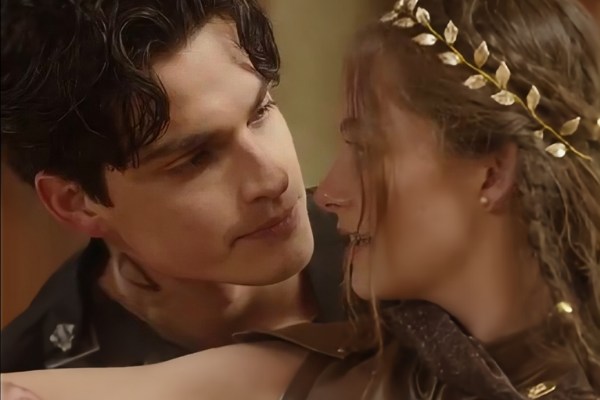
I need to talk about Cameron Porras for a solid stretch here, because his performance as Kairos is the gravitational center that keeps The Daughter of Zeus from spinning into melodrama. This is a character who murdered a woman in cold blood in the opening minutes of the pilot. Who represents everything Aria has learned to fear and hate.
Who is, by any reasonable definition, the antagonist of our heroine’s story.
And yet.
Porras plays Kairos like a man carrying a weight he never asked for, performing violence because it’s the only language the divine realm has taught him.
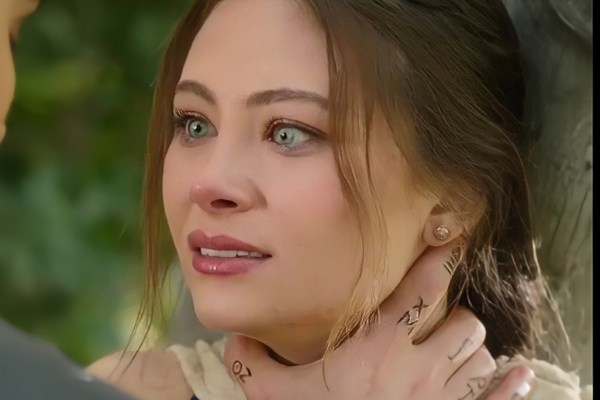
When he grabs Aria’s face in that crucial Episode 4 moment, when the vision hits them both, revealing their fated connection, their destined love that could somehow free him from his curse, you can see every wall he’s built come crashing down in real time.
The shock isn’t just in the prophecy. It’s in Kairos realizing he’s capable of wanting something beyond his duty. That he’s capable of hope, even after everything he’s done.
The enemies-to-lovers arc in The Daughter of Zeus works because it understands that real connection doesn’t erase trauma.
The Daughter of Zeus understands that love born from trauma isn’t clean. It isn’t sweet. It’s two broken people recognizing similar breaks in each other and deciding, against all logic, to stand together anyway.
Porras and his co-star sell this with such raw specificity.
You’re just watching two people learn that “heartless” was never the right word for what they were. “Heart-protected” might be closer. “Heart-armored.” And armor, as The Daughter of Zeus demonstrates beautifully, can always be removed. Slowly. Painfully. And it can also be permanently.
Part 4: The Daughter of Zeus Streaming Guide Online
Where to Experience Aria’s Awakening in Full
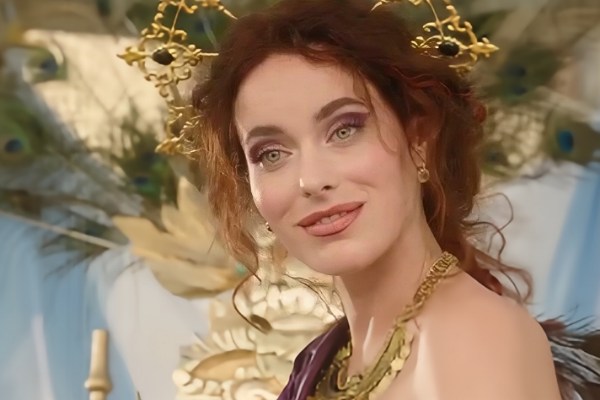
Let’s address the elephant in the room: yes, you can find clips from The Daughter of Zeus scattered across various platforms. Dailymotion has snippets. Social media has reaction videos. The algorithm has blessed (or cursed) you with enough fragmented moments that you probably feel like you know the story already.
You don’t. Trust me on this.
ReelShort offers the complete ten-episode journey as it was meant to be consumed: bingeable but deliberate, fast-paced but emotionally coherent. You can watch Aria grow from terrified child to defiant demigoddess without interruption. You can track Kairos’s evolution from unthinking enforcer to conflicted protector across the full arc of his choices.
The Daughter of Zeus has become a phenomenon because it delivers exactly what short-form drama promises: maximum emotional impact in minimum time. To see that transformation properly, to feel the full weight of “too late the daughter of zeus forsakes you” when it finally lands, you need the complete narrative.
ReelShort makes that completion possible. No fragmented searching, no wondering if you’re watching the right version, no missing the episodes where the real character development happens (looking at you, Episode 6, where Kairos confronts Aria’s father and changes everything).
Just Aria, Kairos, Olympus, and the question that drives the entire series: who is the Daughter of Zeus, and what will she choose to become?
The answer, like all the best answers, is complicated. Beautiful. Worth watching properly.
I’ve watched it twice now, start to finish. I’m probably going to watch it again. And if you’re reading this at 2 AM, bleary-eyed and convinced you’ve seen every possible variation of this story?
You haven’t. Not yet.
Go find out who the Daughter of Zeus really is. The Fates are waiting.